Why Hello Bluebird is a Modern Designer's Secret Weapon
There's a particular feeling when you find a tool that just works. It's not overly complex, it doesn't require a 40-page manual, and it doesn't try to be everything to everyone. Instead, it delivers a specific, high-quality result with an almost effortless grace. For designers, marketers, and creatives working in the modern space, that feeling often comes from discovering the right typeface. In a landscape crowded with loud, overly stylized options, a font like Hello Bluebird stands out precisely because it understands the power of quiet confidence and balanced versatility.
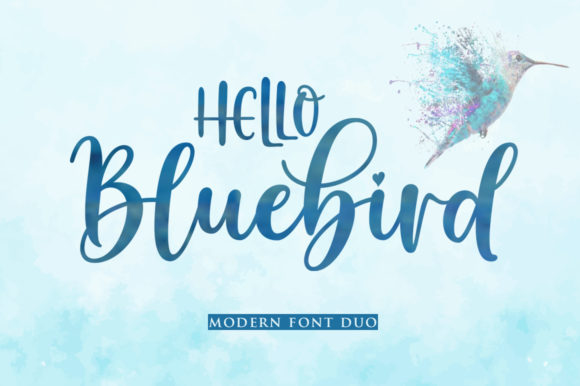
At its core, Hello Bluebird is a premium font duo. This isn't a single, static file; it's a dynamic pairing system designed for real-world use. You get a flowing, connected script font and a clean, sturdy sans serif font. The script carries the personality—it's defined by smooth, elegant curves that feel handwritten yet refined. It avoids the overly casual or chaotic look of many handwritten font options. The sans serif is its perfect counterpart: unassuming, highly legible, and modern. It provides the structural backbone, allowing the script to shine without overwhelming the design. This combination is the key to its utility. You're not just buying a font; you're investing in a built-in font pairing solution that guarantees visual harmony.
Where Hello Bluebird Truly Shines
Understanding a font's personality is one thing; knowing where to apply it is where strategy comes in. Hello Bluebird's blend of elegance and clarity makes it exceptionally versatile, but it excels in specific contexts where brand perception and audience engagement are paramount.
- Fashion & Lifestyle Branding: This is its natural habitat. The script's graceful curves evoke a sense of curated style, luxury, and approachability. Use it for logo design, clothing tags, boutique signage, or social media headers for a fashion brand. It communicates taste without being pretentious.
- Editorial & Publishing: In editorial design, visual hierarchy is everything. The script is perfect for pull quotes, chapter titles, or feature article headlines in magazines and blogs. Paired with the sans serif for body text or subheads, it creates a sophisticated, reader-friendly layout that feels both professional and inviting.
- Packaging & Product Design: From artisanal candle labels to gourmet food packaging, Hello Bluebird adds a touch of handmade charm. The script font can highlight the product name or a key ingredient, while the sans serif handles the necessary details like weight, ingredients, and instructions with crisp clarity.
- Digital Presence & Web Design: Modern web design favors clean, fast-loading, and readable typefaces. Use the sans serif for body copy and navigation to ensure maximum readability. Then, strategically deploy the script for hero text, section dividers, or call-to-action buttons to inject personality and guide the user's eye.
- Social Media & Marketing Graphics: In the fast-scroll world of Instagram and Pinterest, you have seconds to make an impact. The Hello Bluebird duo is perfect for creating cohesive social media graphics. Use the script for a compelling quote graphic and the sans serif for the supporting details. This builds a recognizable visual brand across platforms.
For small business owners and entrepreneurs, this font is a practical design asset. It allows you to create a consistent brand identity across your website, business cards, invoices, and social media without needing a full design suite. The coherence between the two styles fosters brand recognition and projects a level of professionalism that builds trust with your audience.
Making the Decision: Practical Guidance for Your Projects
Choosing a commercial font is a practical decision. Here’s how to evaluate if Hello Bluebird is the right fit for your next project.
Evaluate the Project's Voice: First, consider the core message. Is it romantic, luxurious, friendly, or technical? Hello Bluebird's personality leans toward the elegant, approachable, and modern. It's a fantastic choice for projects that need to feel personal yet polished. It may not be the best fit for ultra-corporate, industrial, or highly technical content where a neutral display font or a traditional serif font might be more appropriate.
Test Readability in Context: Always test the font at the size and on the medium you'll use. The script is beautiful for headlines, but setting a full paragraph in it will hurt readability. Conversely, the sans serif is built for legibility. Print out a sample, view it on a mobile screen, and check the letter-spacing. A good typeface holds up across contexts.
Review the Included Files: A quality premium font comes with more than just basic letters. Check the character map. Does the script include alternates and ligatures? These are variations of letters (like a different 'b' or 'h') and connected letter pairs that make the script look more natural and less repetitive. Hello Bluebird typically includes these, giving you more creative control to avoid that "cookie-cutter" look.
Understand the Licensing: This is critical. Font licensing dictates how you can use the font. For commercial font use, ensure the license covers your intended applications—whether it's for a client's logo, merchandise for sale, or a published ebook. Reputable foundries and marketplaces are clear about this. Using a font outside its license can lead to legal issues, so this step is non-negotiable for any professional work.
Ultimately, the strength of a creative font like Hello Bluebird lies in its ability to solve design problems with elegance. It provides a ready-made solution for creating visual hierarchy, establishing brand tone, and engaging an audience. By pairing the expressive script with the reliable sans serif, you gain a tool that brings cohesion and sophistication to a wide array of projects. It’s a testament to modern typography—where thoughtful design meets practical application, empowering you to create work that resonates deeply and looks impeccably crafted.